History
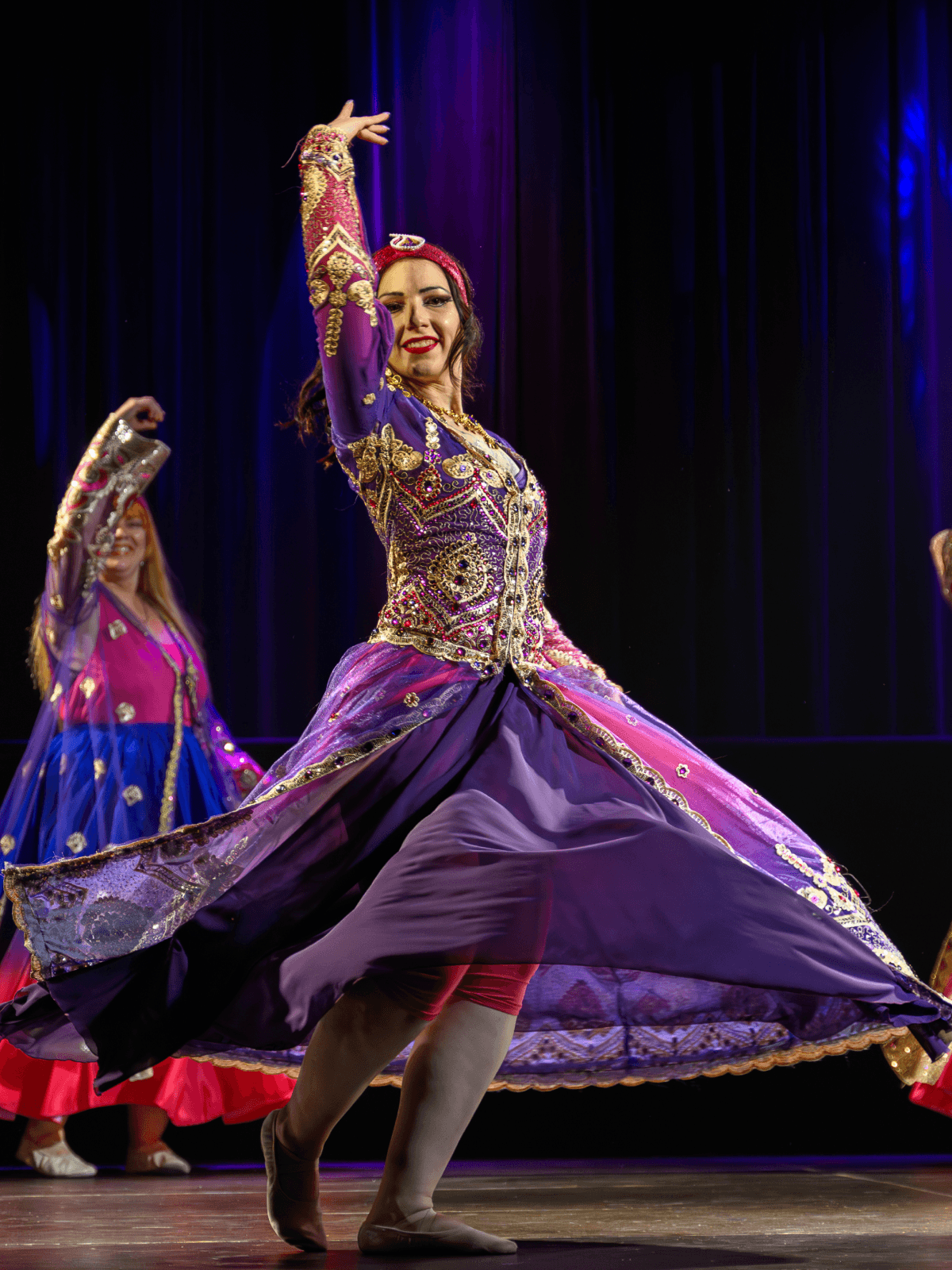
Persian dance is a whole world of traditions from Iran and the wider Silk Road. The neoclassical style we most often teach took shape from around the 1970s: it joins traditional Persian steps and Silk Road movement with the aesthetics of classical ballet and a contemporary way of reading music. Today the dances of Iran are usually grouped into four families — line and chain folk dances, ritual dances (tied to Sufism and mysticism), urban social dances, and virtuosic improvised solos, which include the elegant neoclassical style.
Technique
Persian dance is grace made visible: fluid, airy, subtle. Unlike oriental dance — the belly dance it is so often confused with — it works mainly through the arms and the torso, with very feminine, expressive lines. It is not without rhythm, though: the footwork is tied to the 6/8 rhythm at the heart of Persian music, and it can feel close to a waltz. Above all, it asks you to express emotion.
In class
At Hamsa, Persian dance is taught by Apsara Afsanesara — the first professional teacher of Persian dance in Poland — who also brings in the neighbouring traditions of the Silk Road, including Afghan dance.
Music
We dance to classical Persian music, or to contemporary music built on the same classical foundations, letting the dancer become the music itself.
Level
Persian dance suits any age and any level. It is gentle on the joints, it builds balance and coordination, and it is a beautiful complement for oriental dancers.
Costume
The costume is flowing and fully covering — an elegant choice for anyone who loves the music of the East but prefers to dance covered.