
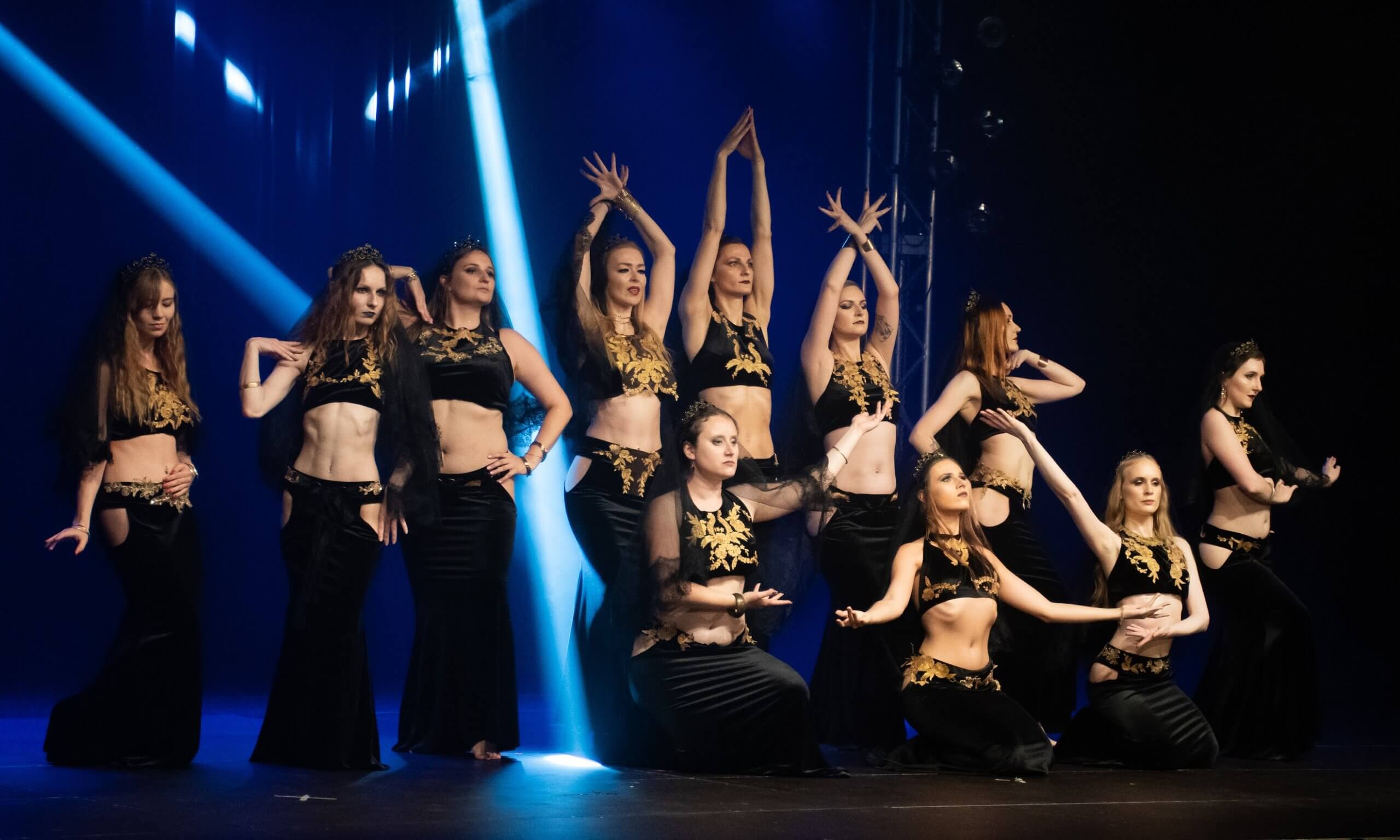
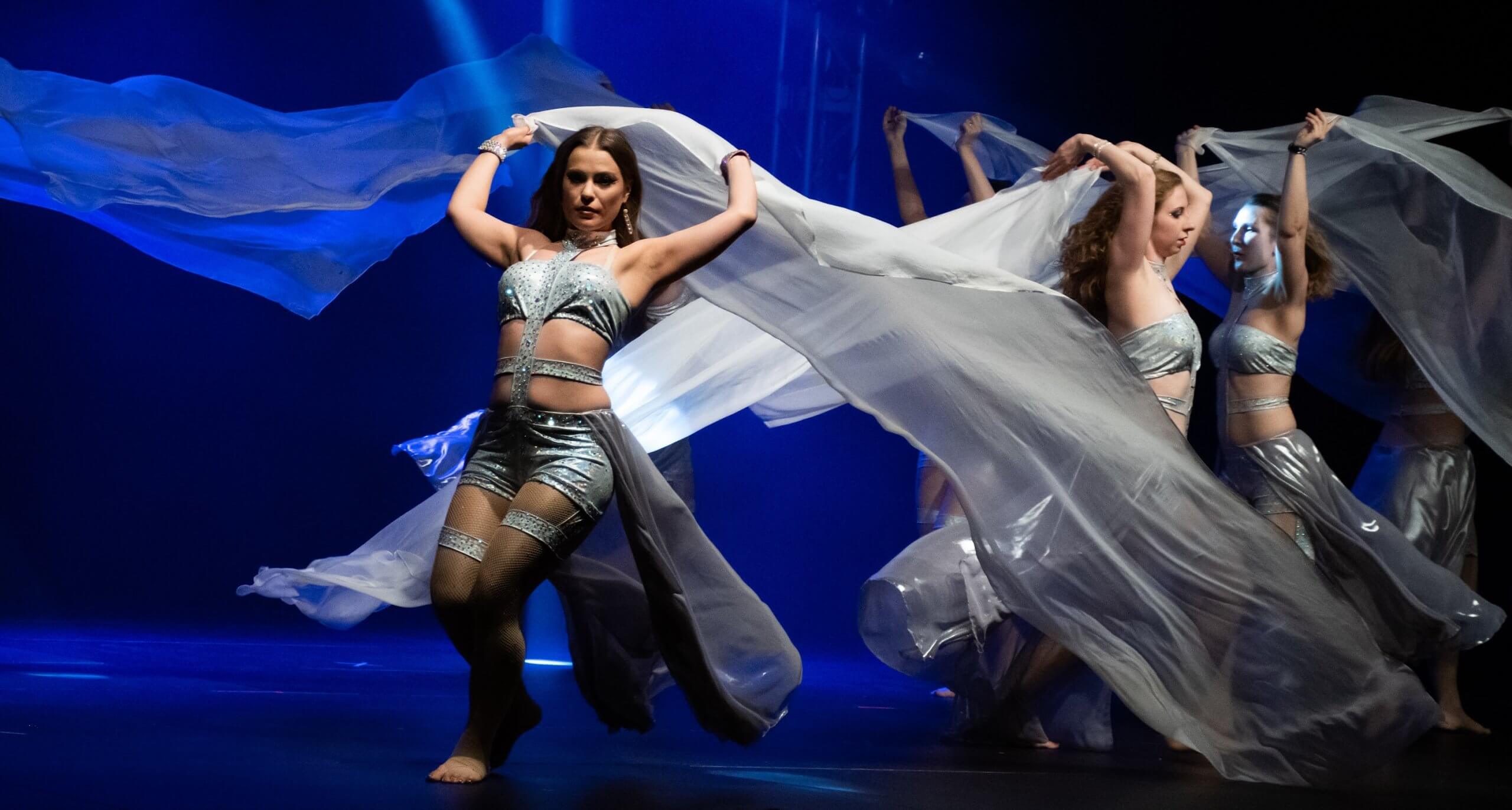
History
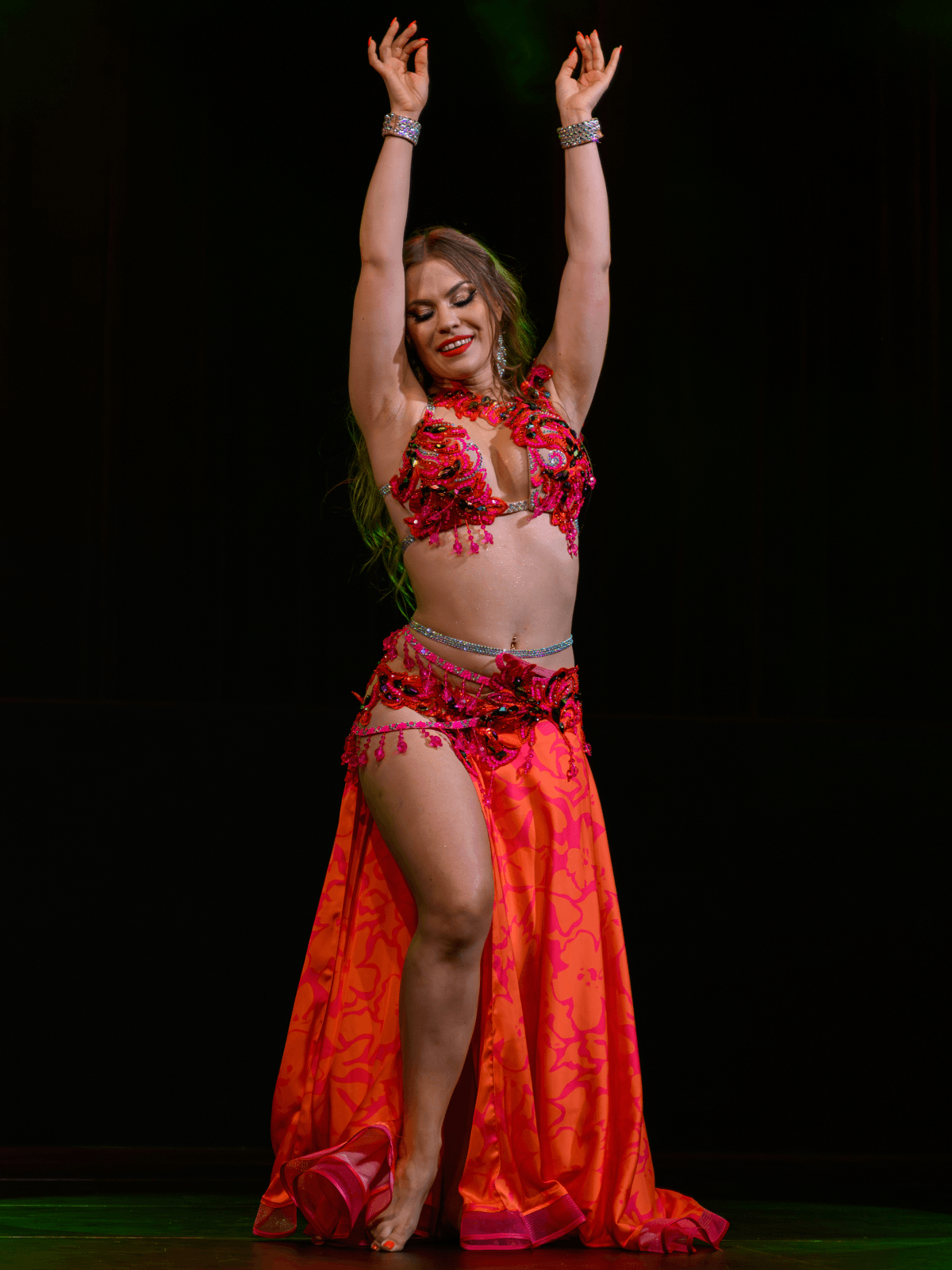
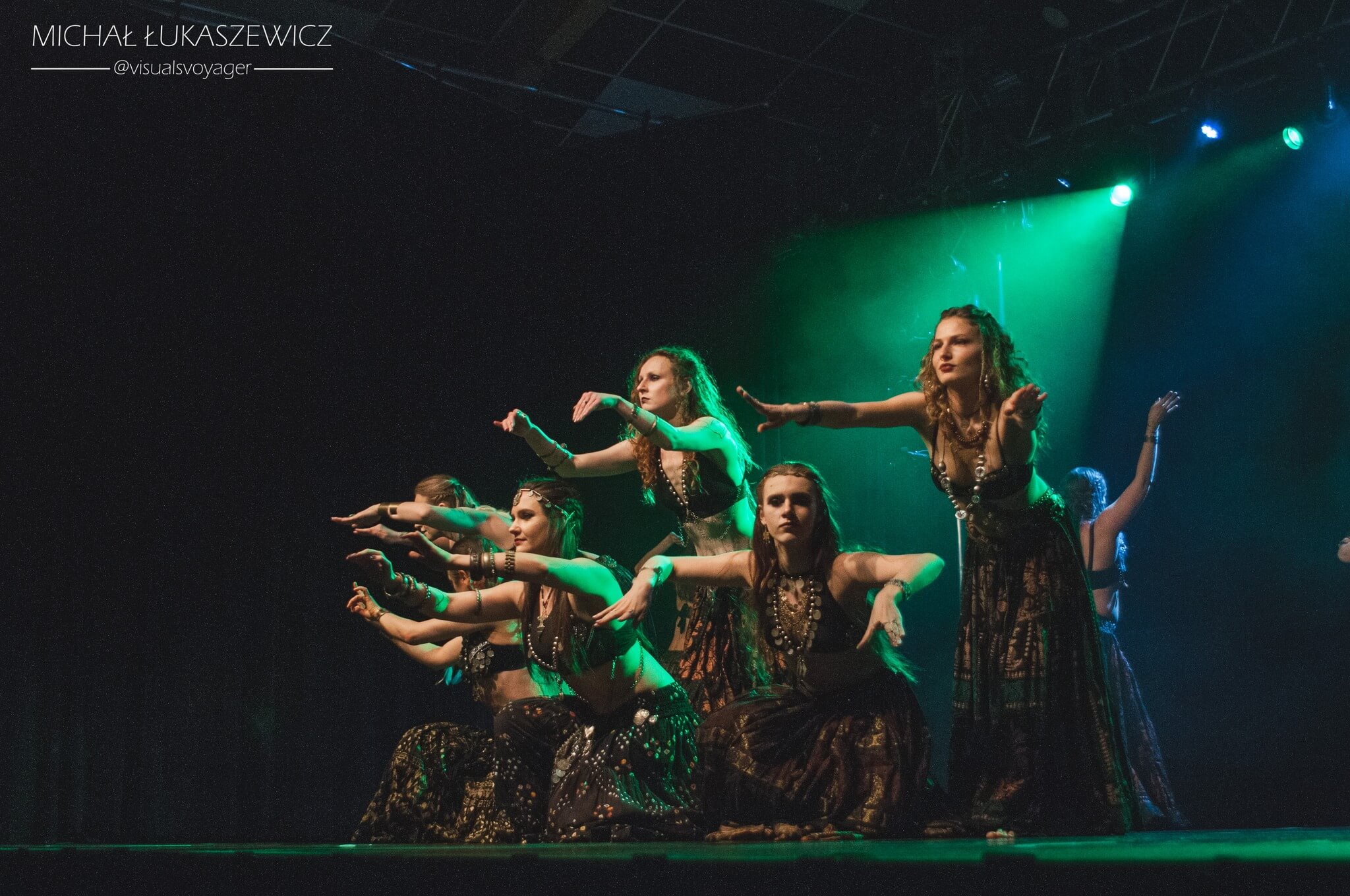
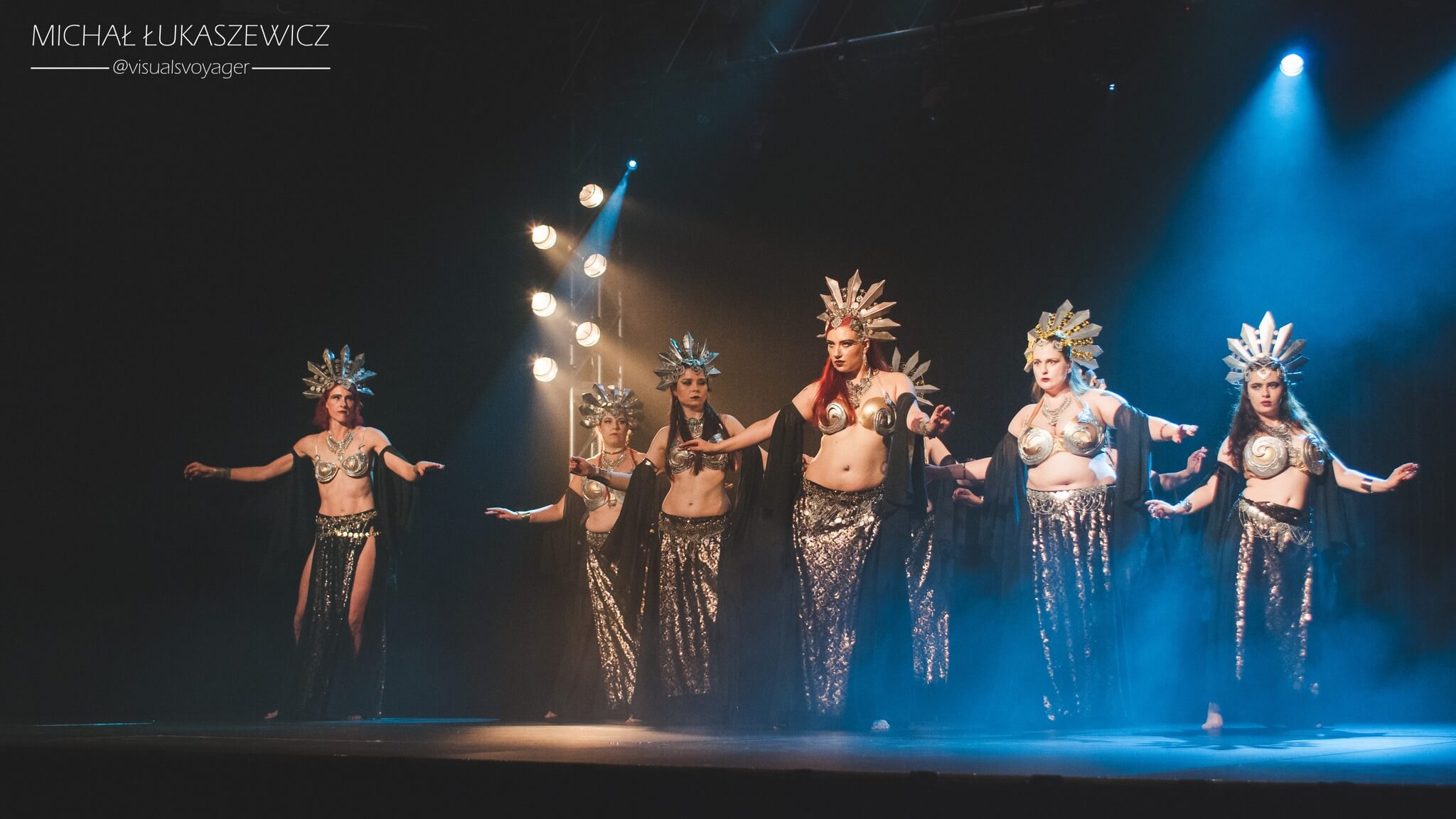
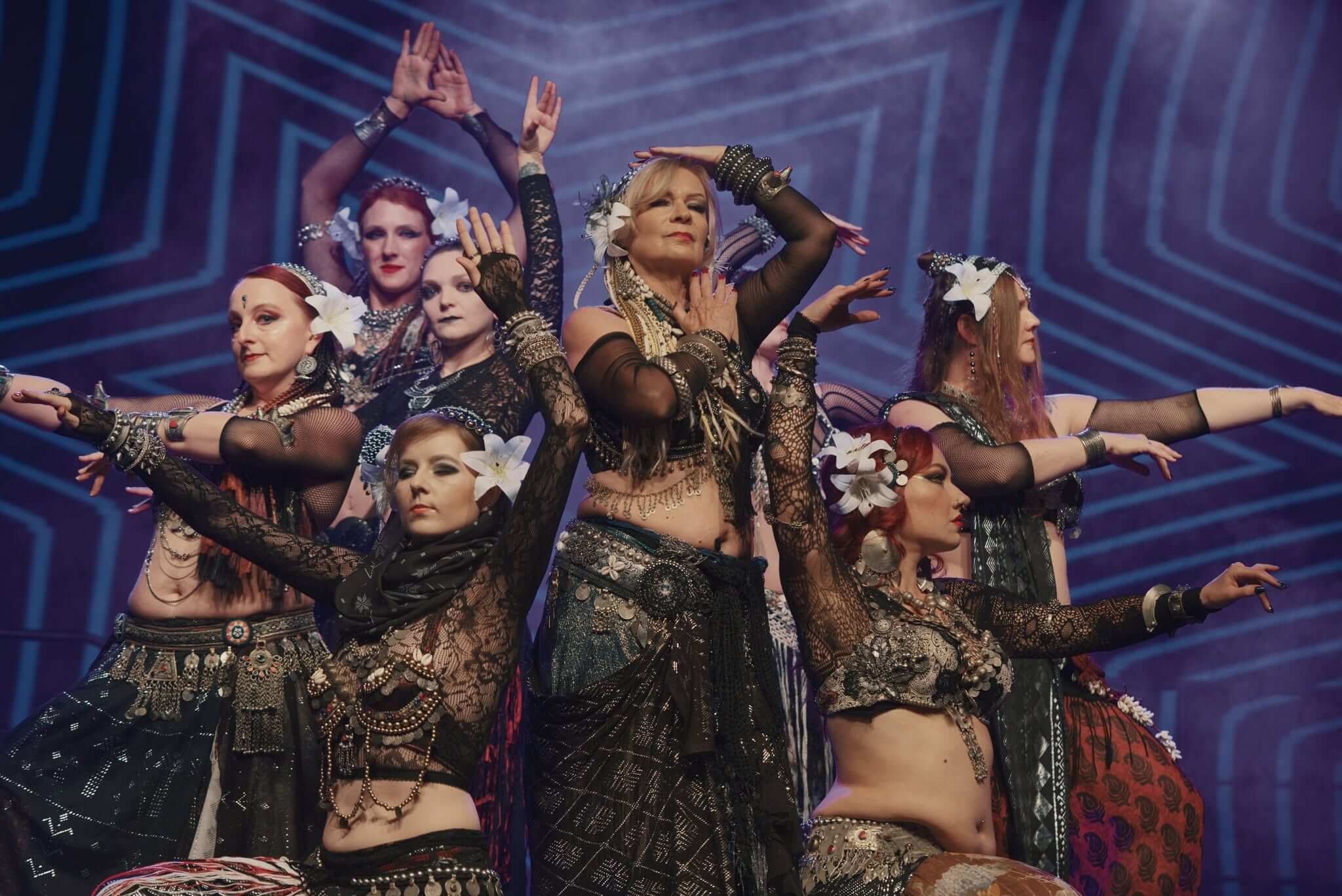
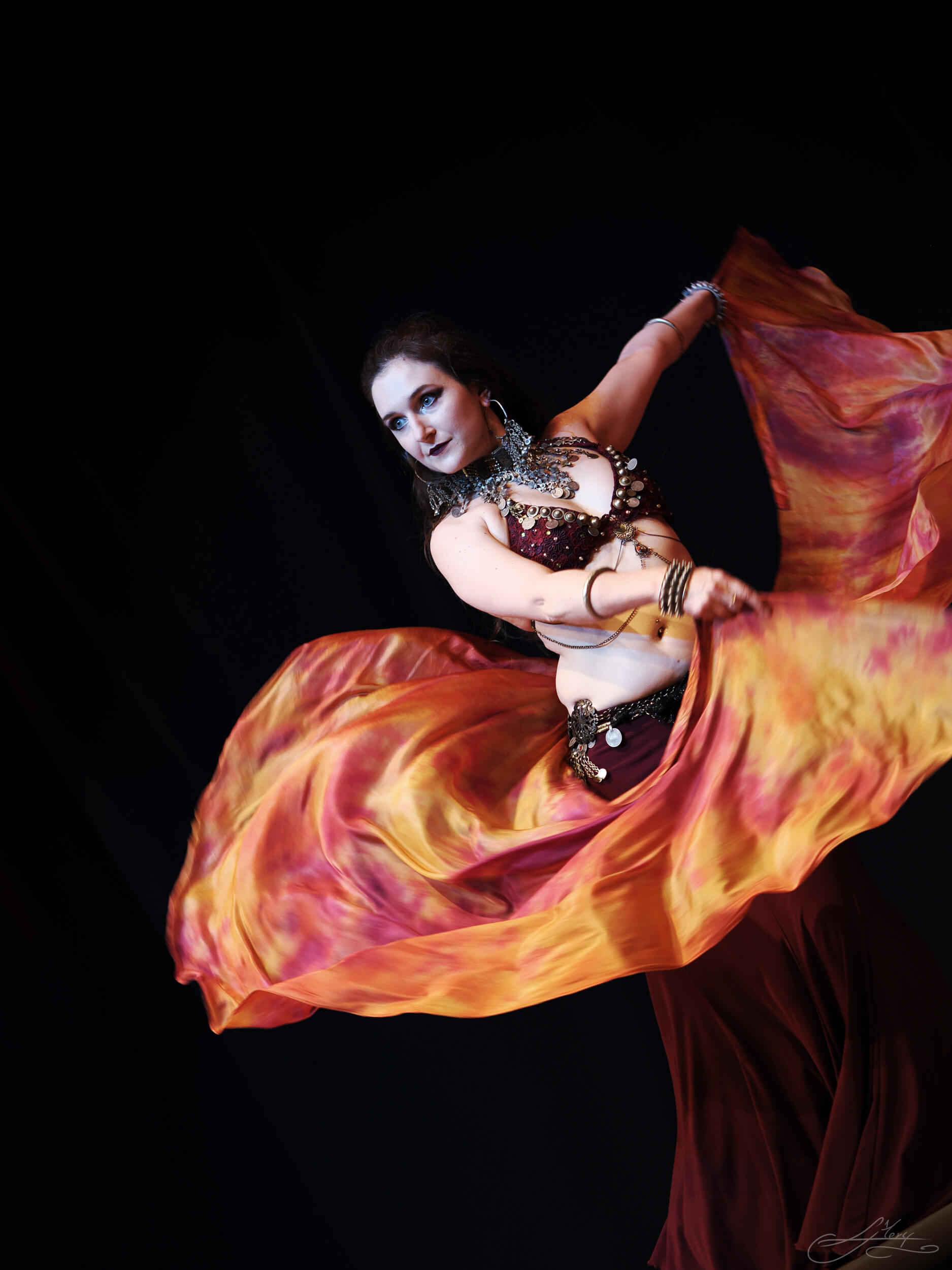
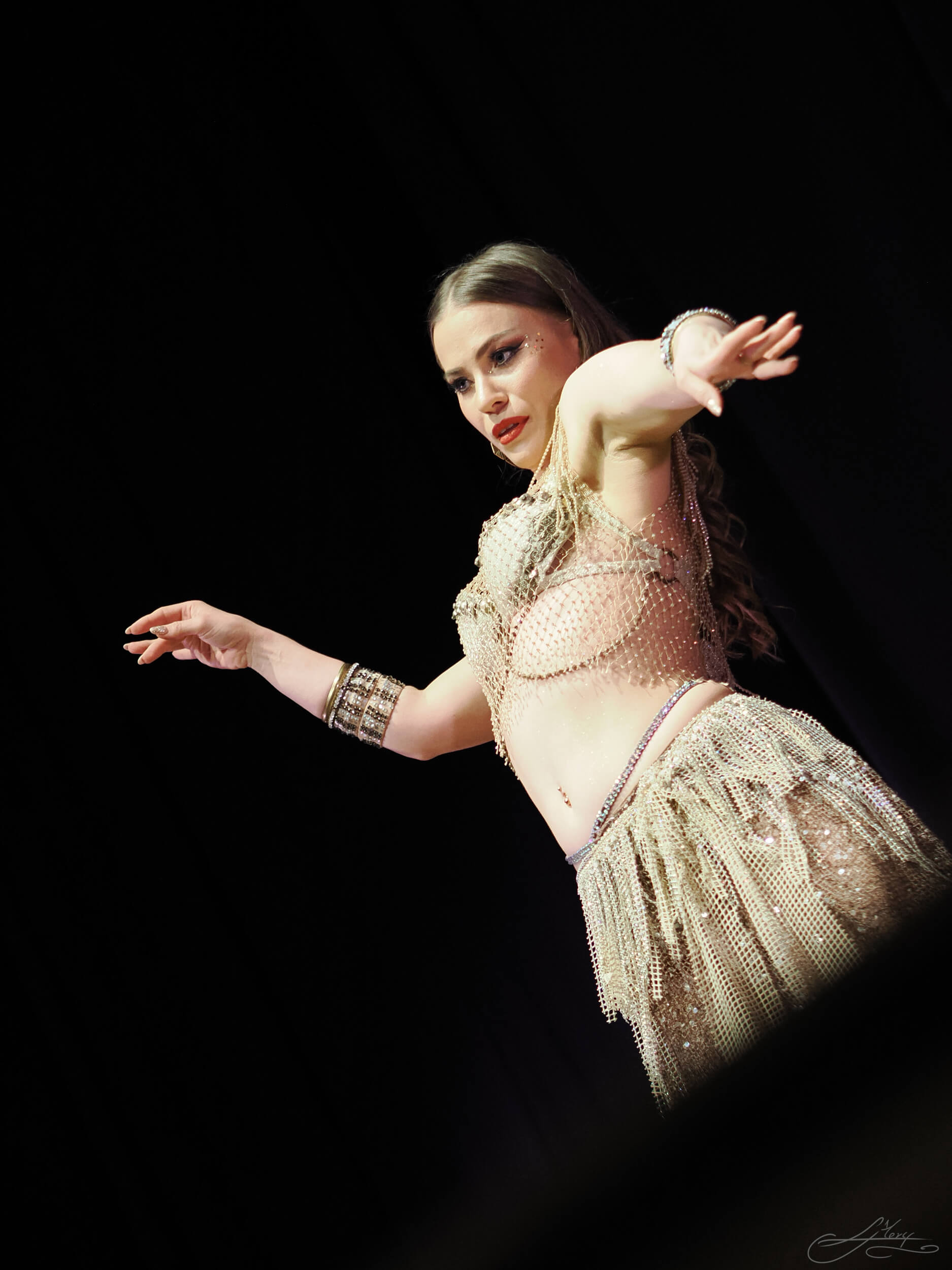
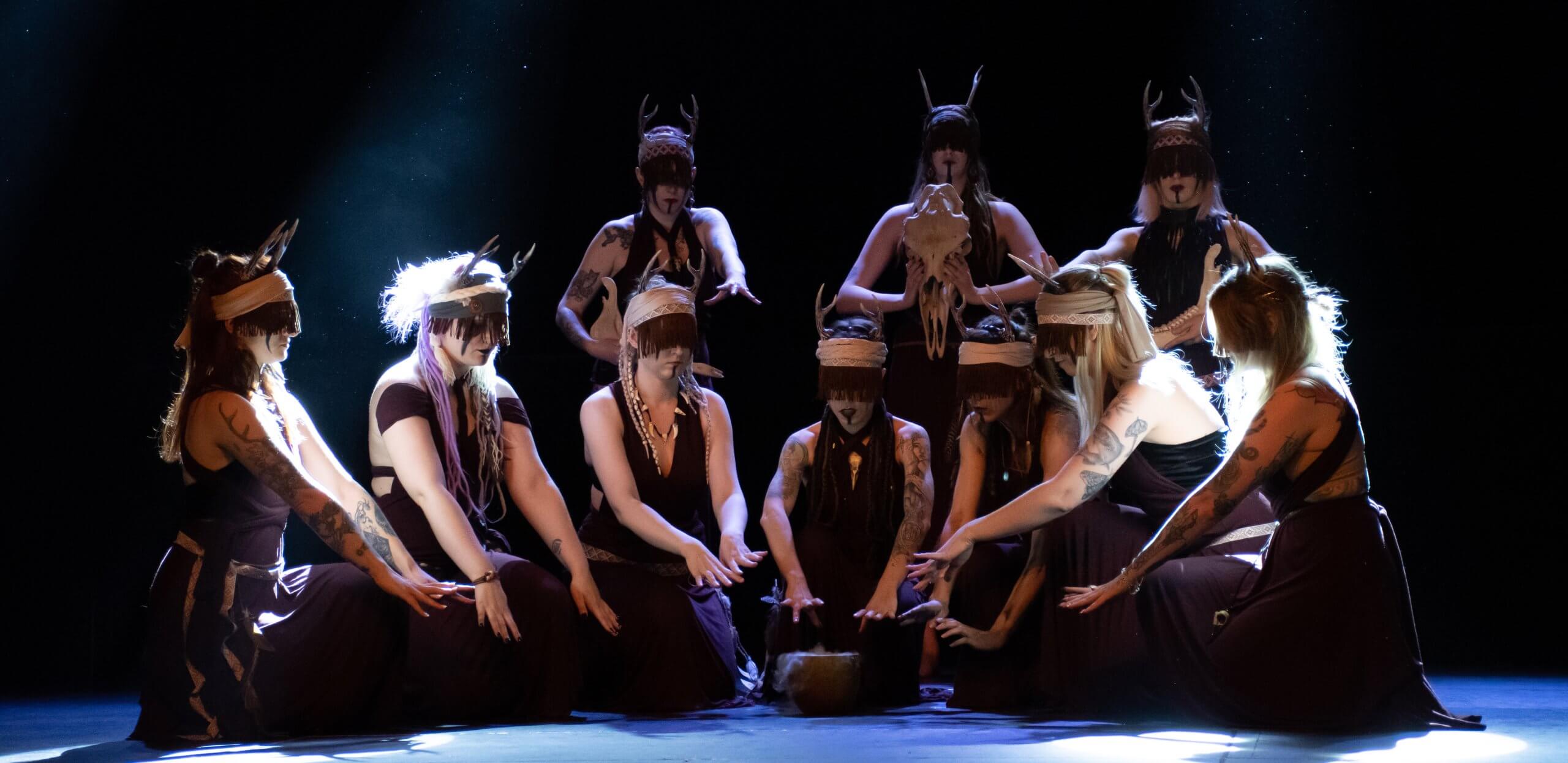
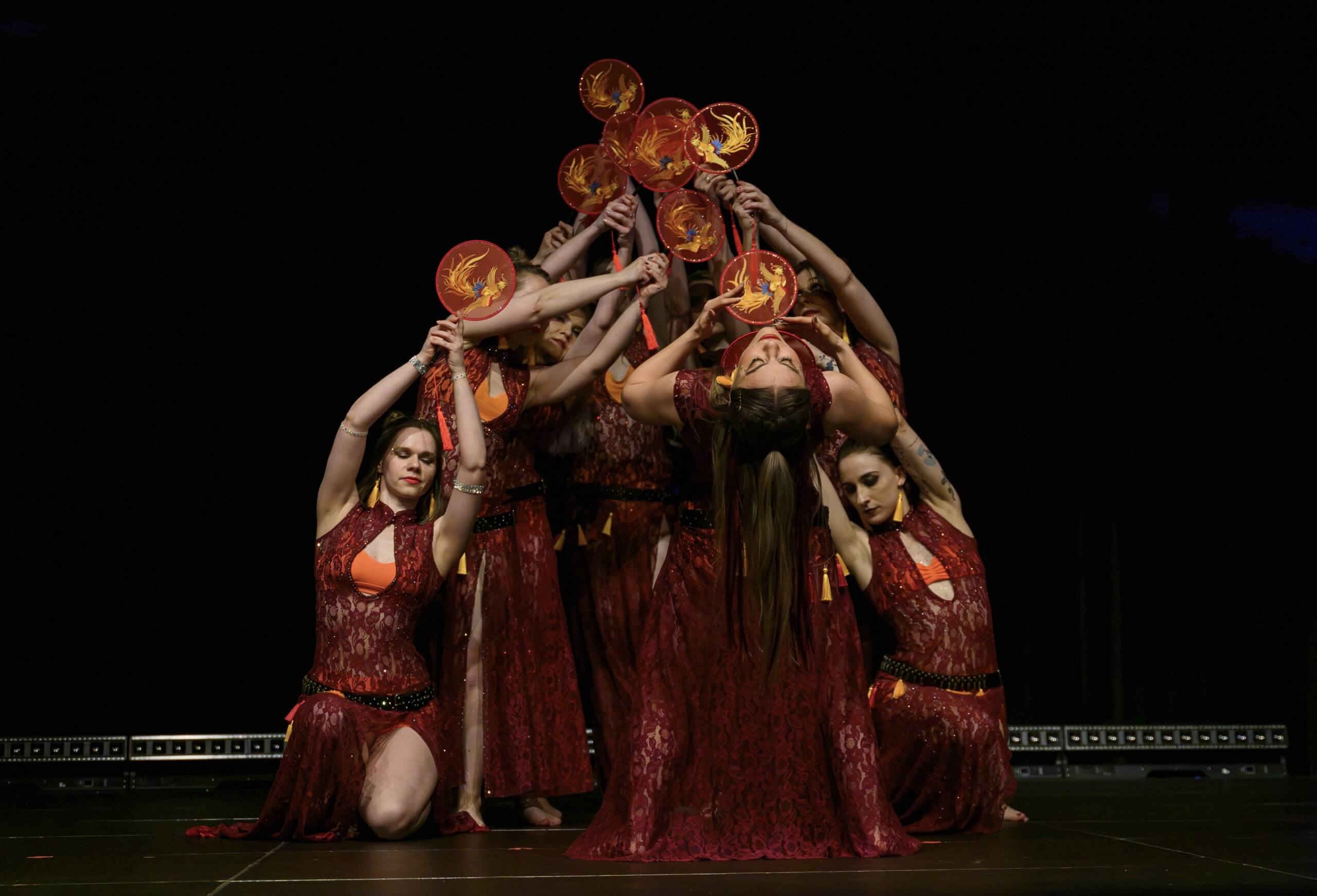
Tribal fusion is a young style. It grew in the United States in the late 1990s and 2000s out of American Tribal Style (ATS), taking that grounded posture and shared movement vocabulary and fusing it with oriental dance, flamenco, Indian classical dance, and urban styles such as popping. It is its own lineage — related to the belly dance of Egypt, but distinct from it — and at Hamsa we dance it as a contemporary fusion of oriental dance with elements of many other techniques.
Technique
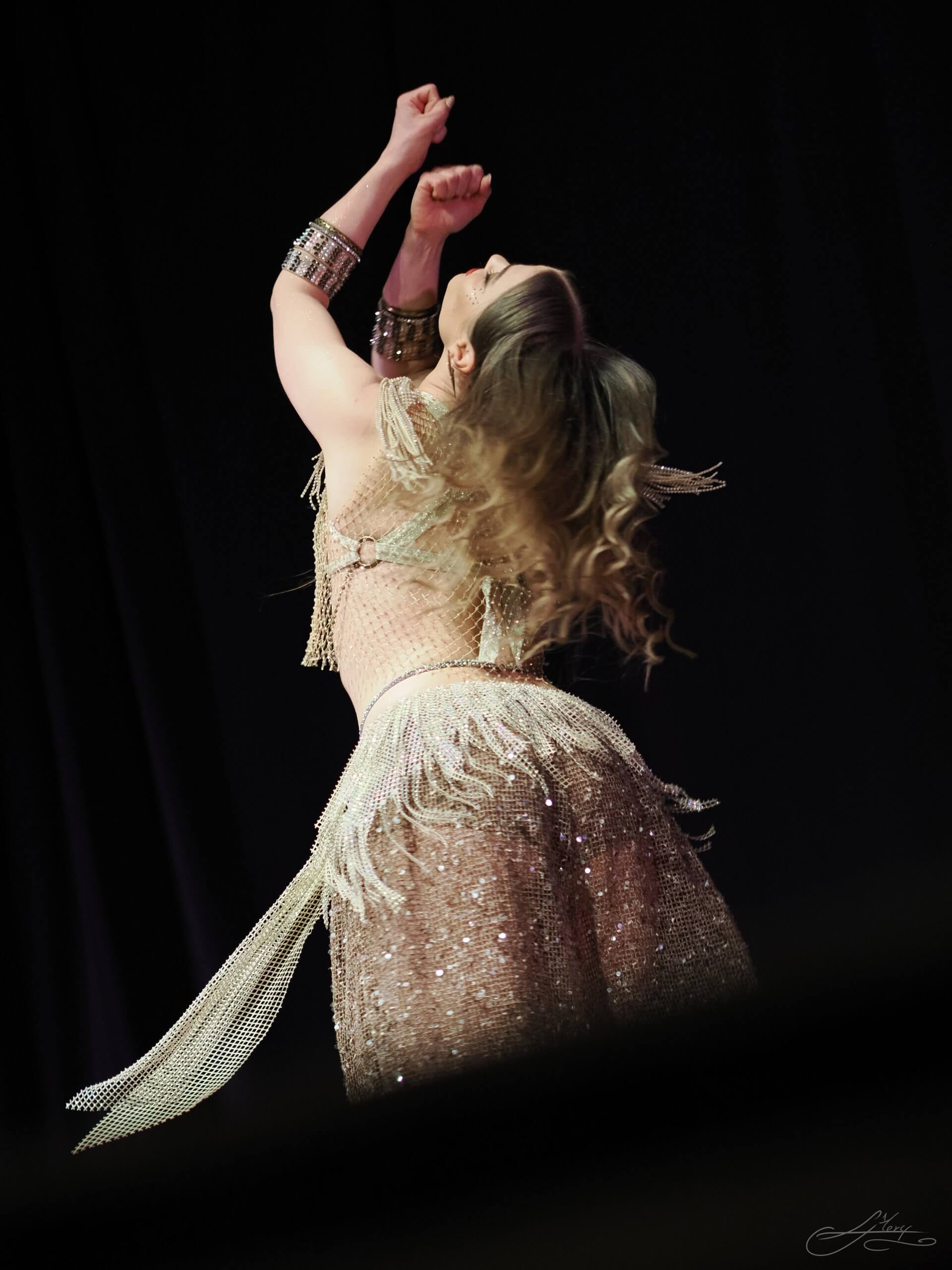
Fusion Bellydance is built on control. You’ll work through slow, deliberate muscular isolations of the ribcage and hips, often layering more than one at a time, from a grounded posture that keeps you connected to the floor. Over time it develops precision of movement, real command of the body and a fine awareness of the muscles — and alongside that, it leaves genuine space for your own expression and creativity.
In class
At Hamsa, Fusion Bellydance is taught by Dominika Suchecka, our artistic director, and by Agata Zakrzewska. It’s a technique-forward class with room to make the movement your own.
Music
The music is varied — from traditional and ethnic sounds through to contemporary electronic. Part of the style is learning to read very different music and answer it with the same controlled precision.
Level
Fusion Bellydance is built on body awareness and control, which makes it a rewarding style to grow into. Come as you are — the work is in the precision, and that develops with practice.
Costume
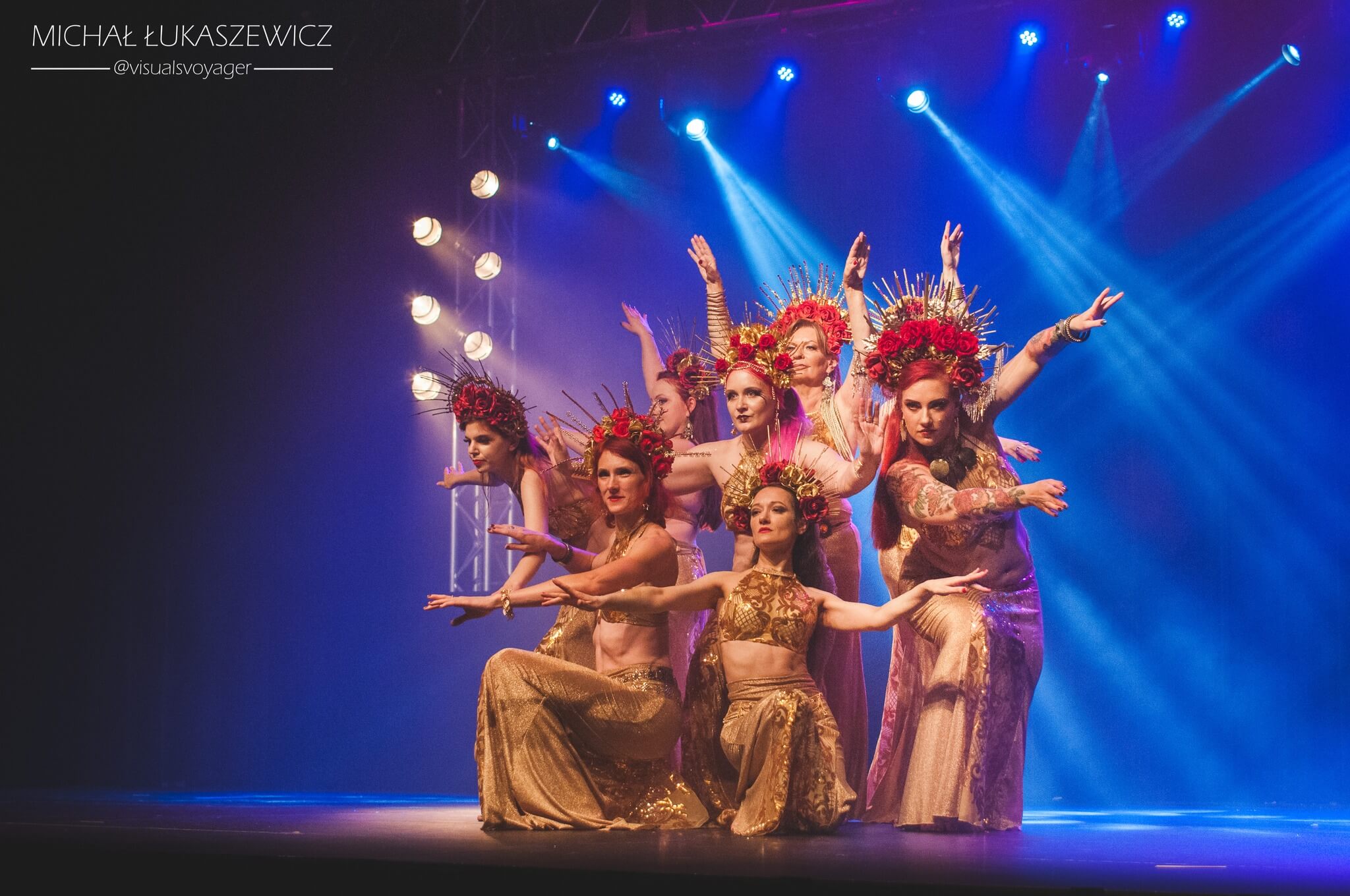
For class, wear comfortable clothes you can move freely in — nothing special is needed to start. The ornate stage look people picture with tribal fusion belongs to performance, not the studio floor.