History
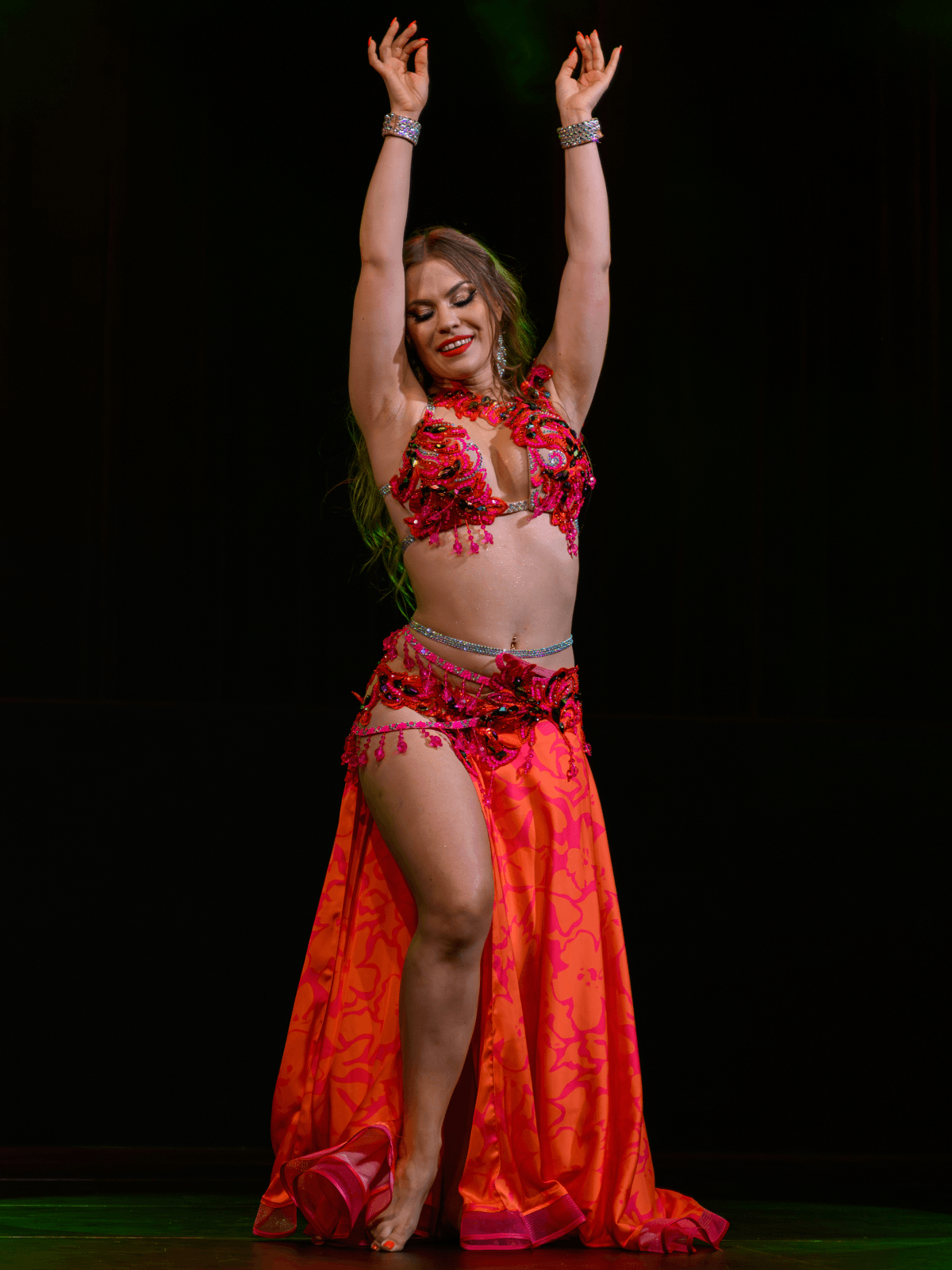
Oriental dance—or belly dance, known as raqs sharqi—is a stage-performance form of belly dance. While it is a vibrant and constantly evolving art form, it draws heavily from traditional dance styles originating in the Middle East, North Africa, and Central Asia. Egypt is the primary home of raqs sharqi; there, no major family gathering, celebration, wedding, or even a night out at a club is complete without a dance performance. Over time, the style has also developed in the United States and Europe; today, it is danced worldwide, whether in dance school classes, at international festivals, or in competitions.
Technique
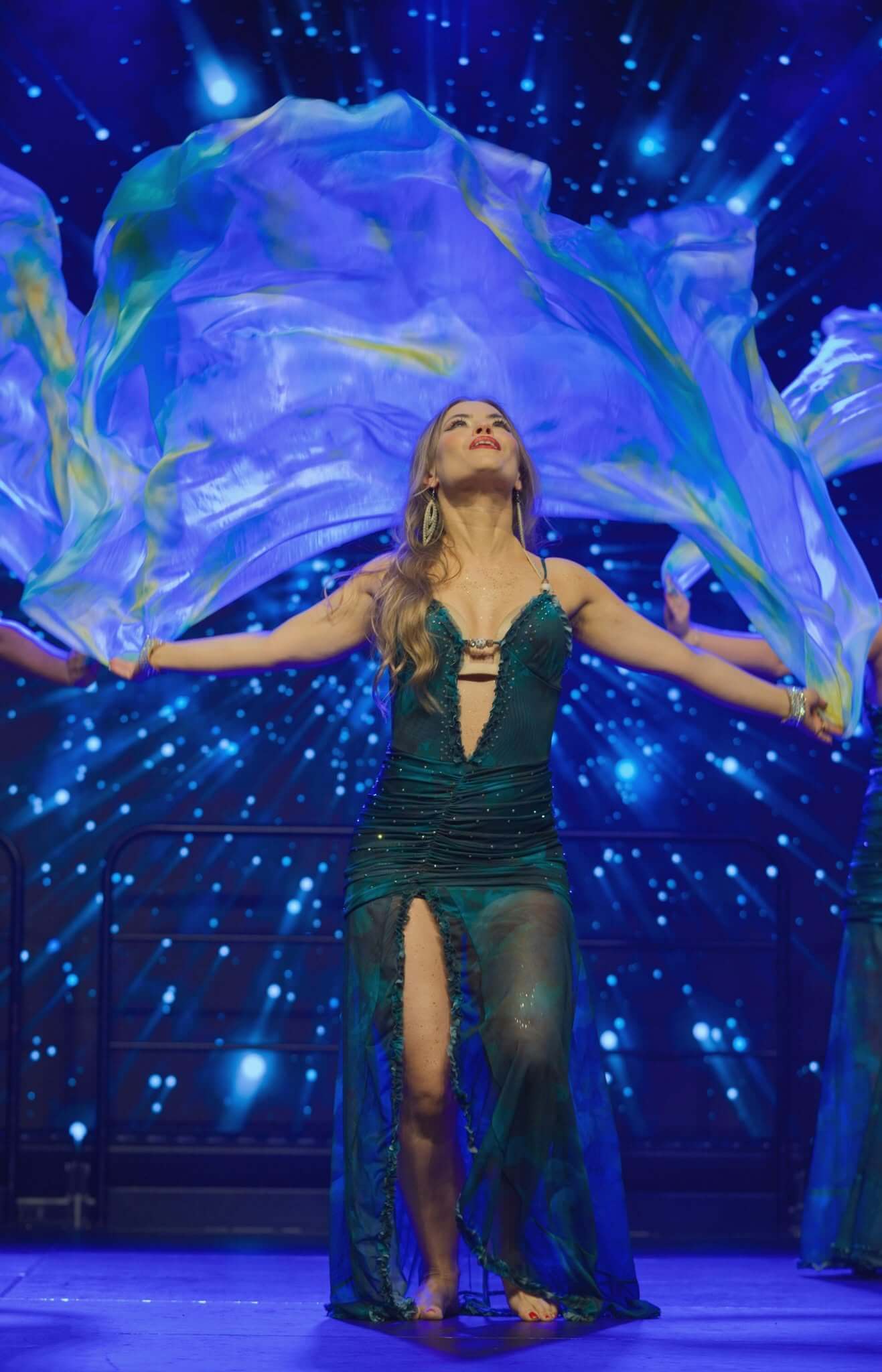
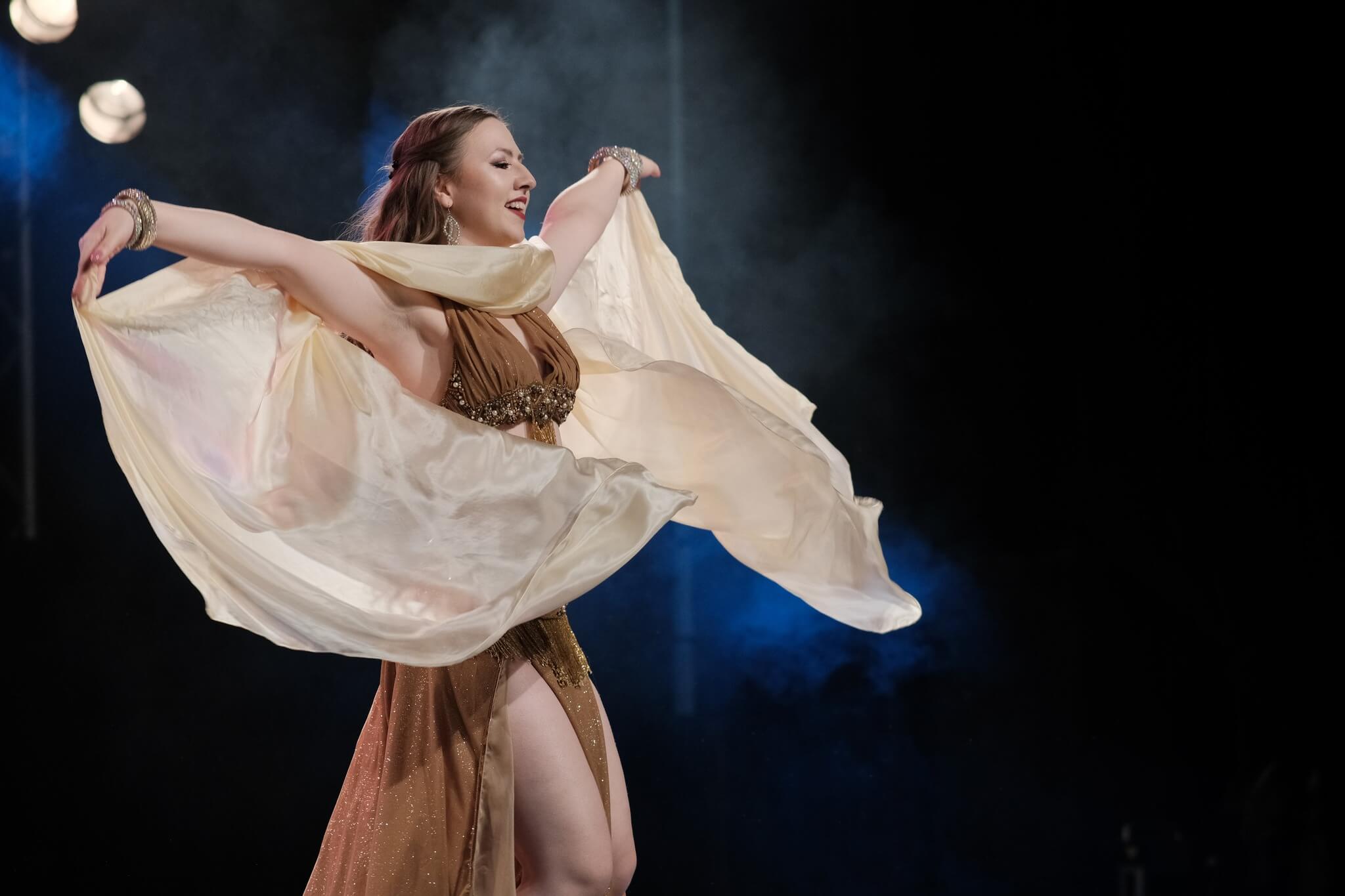
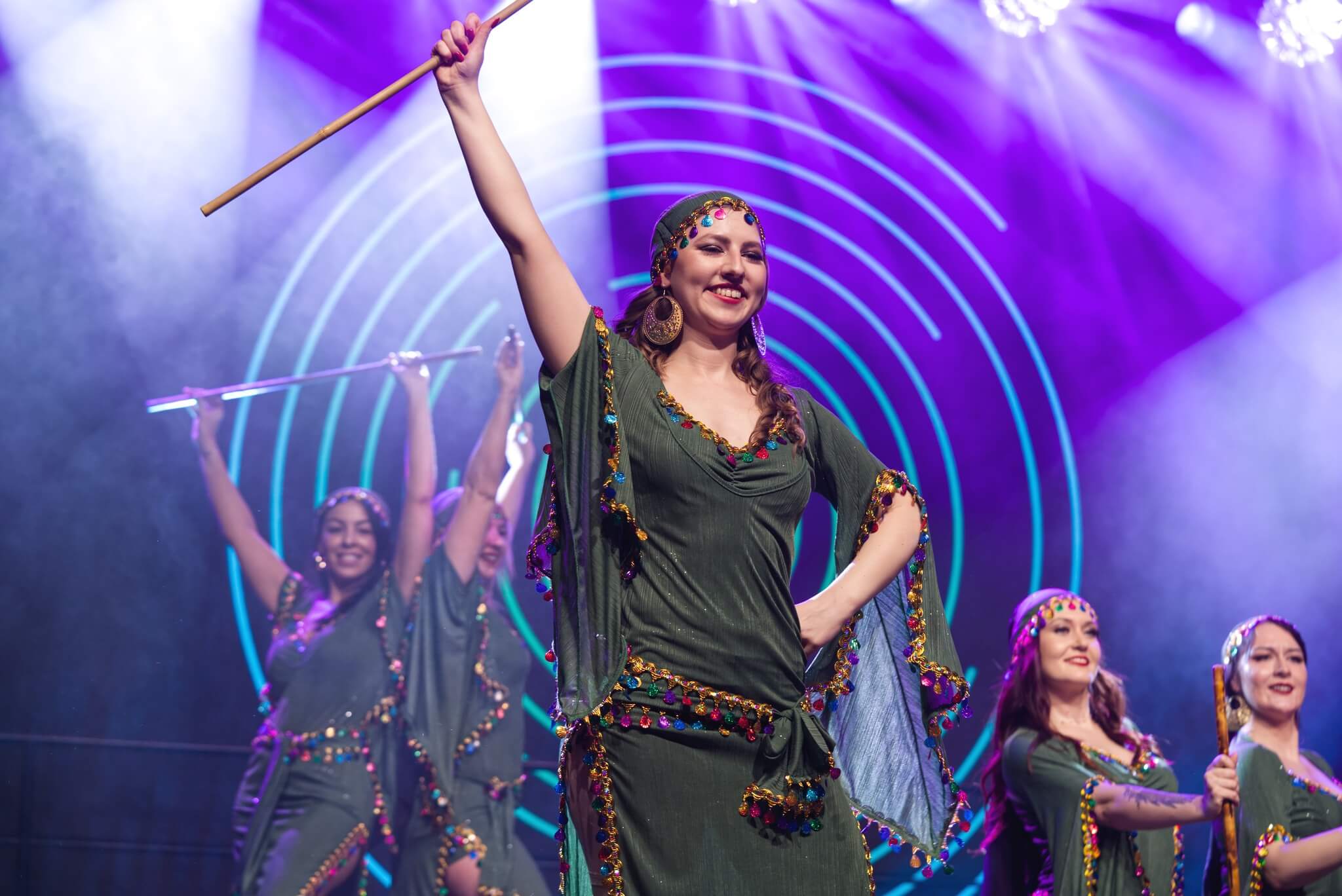
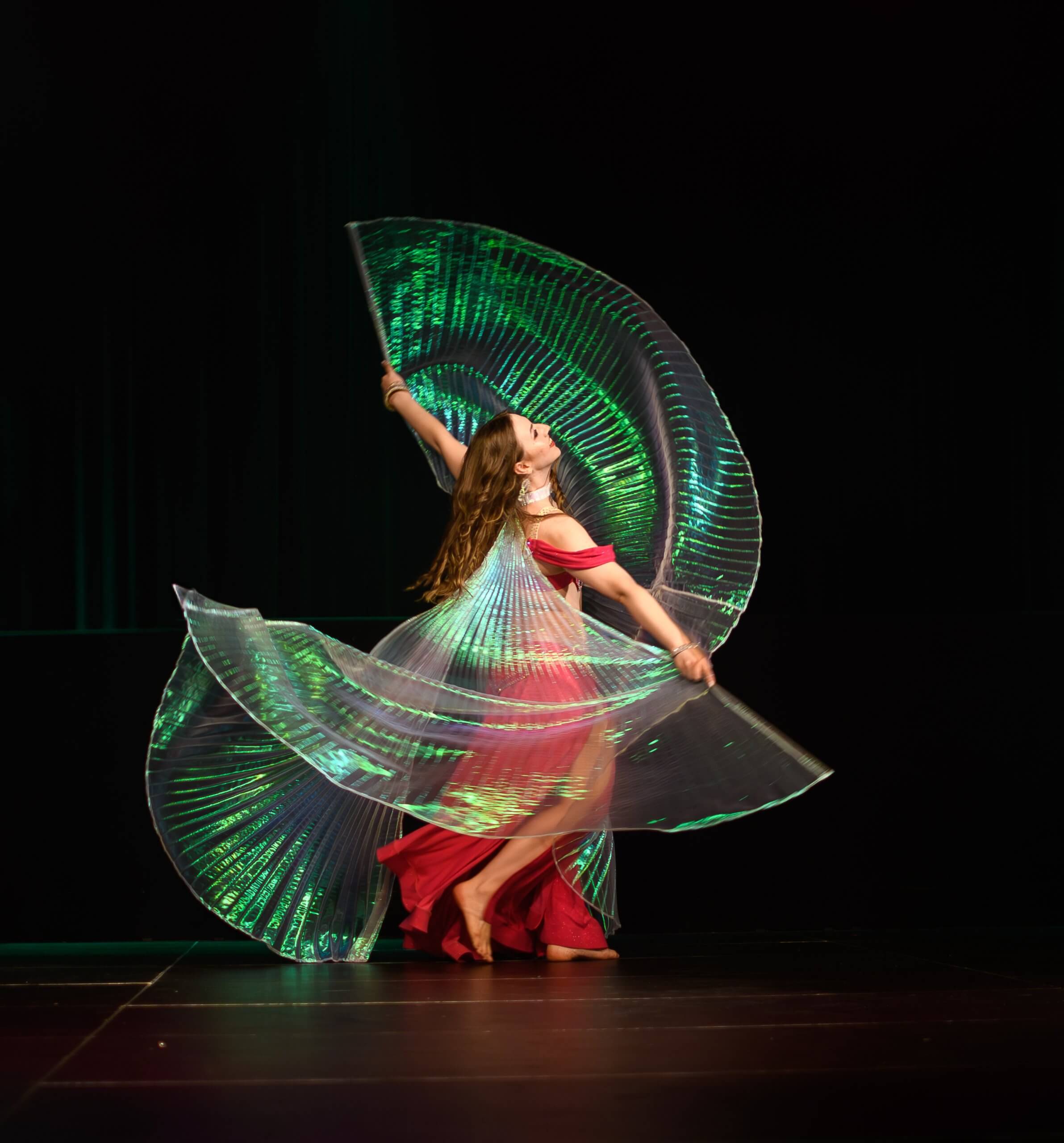
Oriental dance relies heavily on the art of isolation. Its technical foundation consists of fluid and accented movements of the hips, chest, and shoulders. Other characteristic elements include shimmies (primarily of the hips) and undulations (involving the belly, torso, and arms), as well as graceful turns, steps, and subtle hand movements. At advanced levels, students also learn to dance with props—such as veils, Isis wings, silk fans, the Egyptian assaya (cane), or sagat (finger cymbals).
Classes
Oriental dance is the heart of Hamsa. Our classes are led by Dominika Suchecka—who has traveled to Cairo numerous times for training and performances—as well as other prominent and incredibly talented Warsaw-based representatives of the style: Agata Zakrzewska, Zoanna, and Yanizeh. In our classes, our experienced instructors introduce students to the rich variety of Oriental dance techniques in an accessible, step-by-step manner, guiding them confidently all the way—from their very first steps to the stage! After roughly eight to twelve months of training, students have the opportunity to perform at one of Hamsa’s gala events in a group routine choreographed and coordinated by their instructor. Such a performance serves as a huge motivator for growth while also being an unforgettable adventure! Naturally, performing is not mandatory; students can join in whenever they feel ready.
Music
We dance to both classical and contemporary Arabic music—primarily Egyptian, but also styles from the Persian Gulf region, Lebanon, Morocco, and Turkey. A genre frequently used and loved by dancers is the “drum solo” (or tabla solo)—highly energetic Arabic music driven by drums and other percussion instruments.
Level
We welcome everyone, from absolute beginners to experienced dancers—our school offers classes for every skill level! Oriental dance improves posture, builds coordination and body awareness, and has a unique quality that helps you relax and feel more at home in your own body. We welcome dancers of all ages!
Costumes
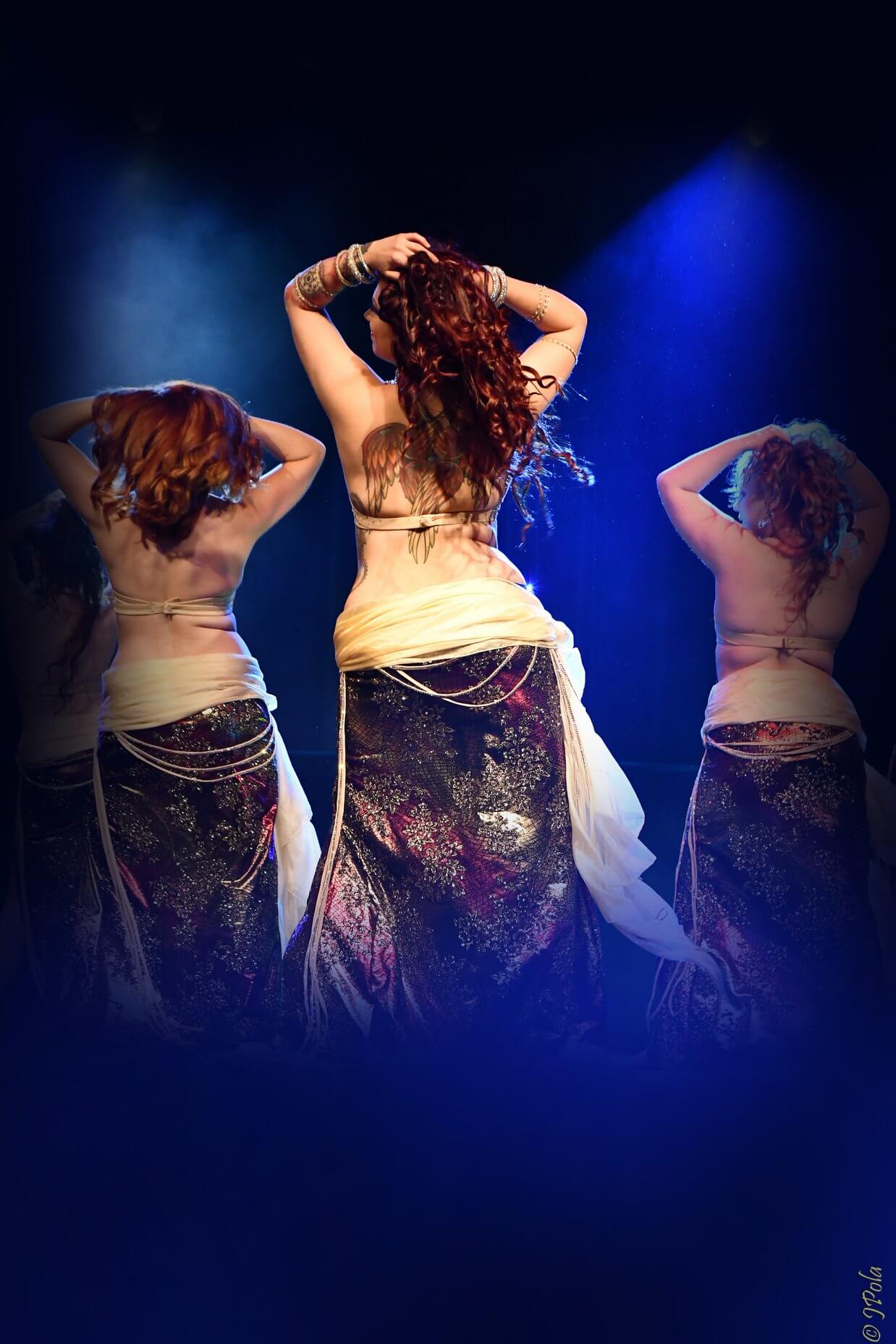
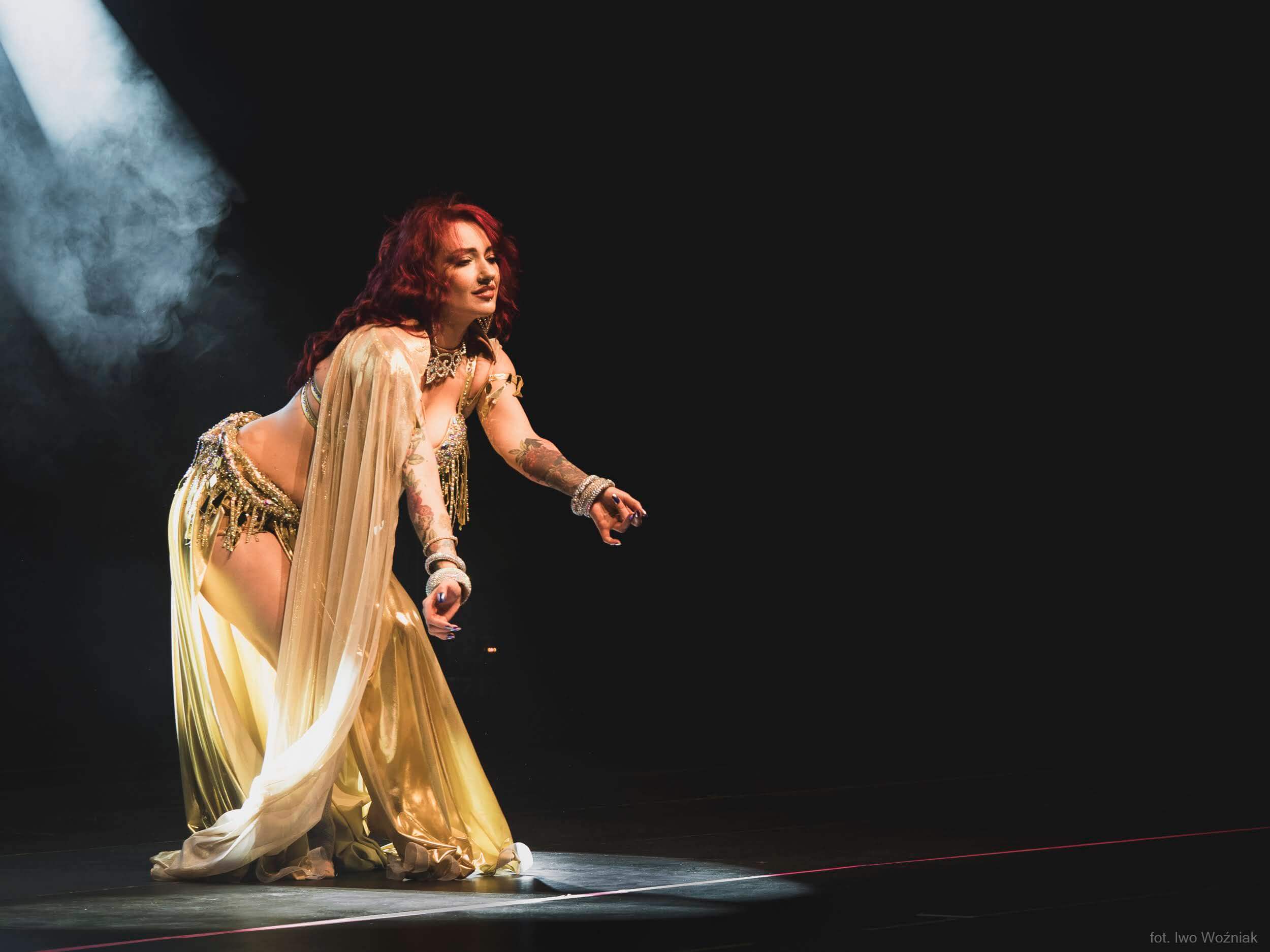
Stage costumes vary depending on the specific style of belly dance. Sometimes it is simply a long gown (a traditional galabeya) paired with a fitted or loose, shimmering hip scarf. At other times, the outfit is designed to accentuate hip movements, consisting of a skirt or trousers paired with a heavily embellished belt and a top adorned with sequins, crystals, and fringe. As for the classes themselves, the priority is comfort! Athletic pants or leggings work best, paired with a top that allows torso movements to be clearly seen (though it doesn’t have to be tight or midriff-baring). Regarding footwear, we dance barefoot, in socks, or in ballet slippers. In special cases—such as an injury or other health-related reasons—you may train in shoes with light-colored soles. You are welcome to bring your own favorite hip scarf, or you can borrow one from us (you’ll find a box of “studio” scarves in every dance hall).