History
The silk fan — the fanveil — is a modern prop. It grew up over the last few decades in the tribal and fusion bellydance world and the wider flow-arts scene, and from there it spread to dancers, performers and festivals around the world. It isn’t a folk tradition tied to one country. At Hamsa, Agata Zakrzewska teaches it as a dance technique in its own right, drawing on more than a decade of work with the fans.
Technique
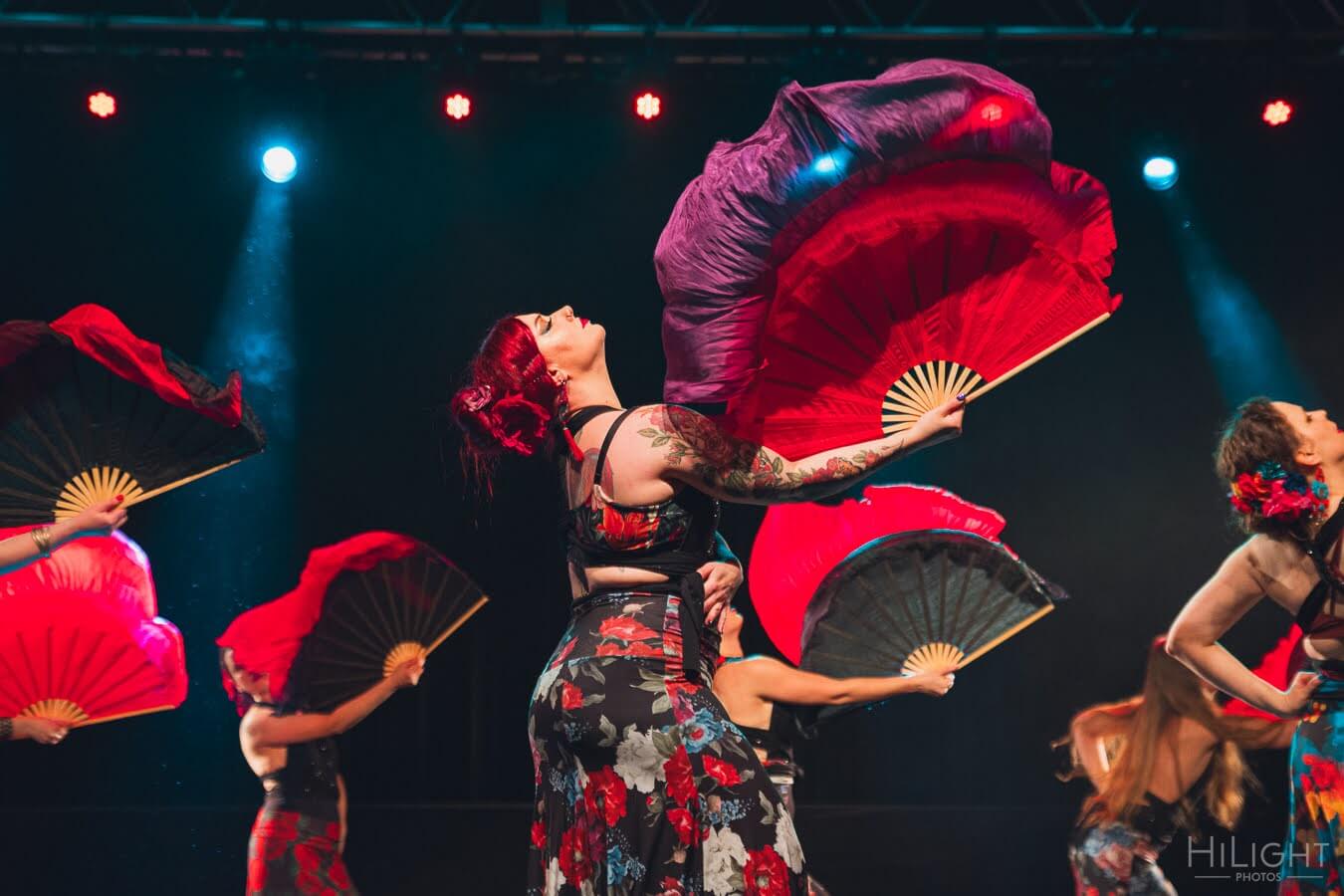
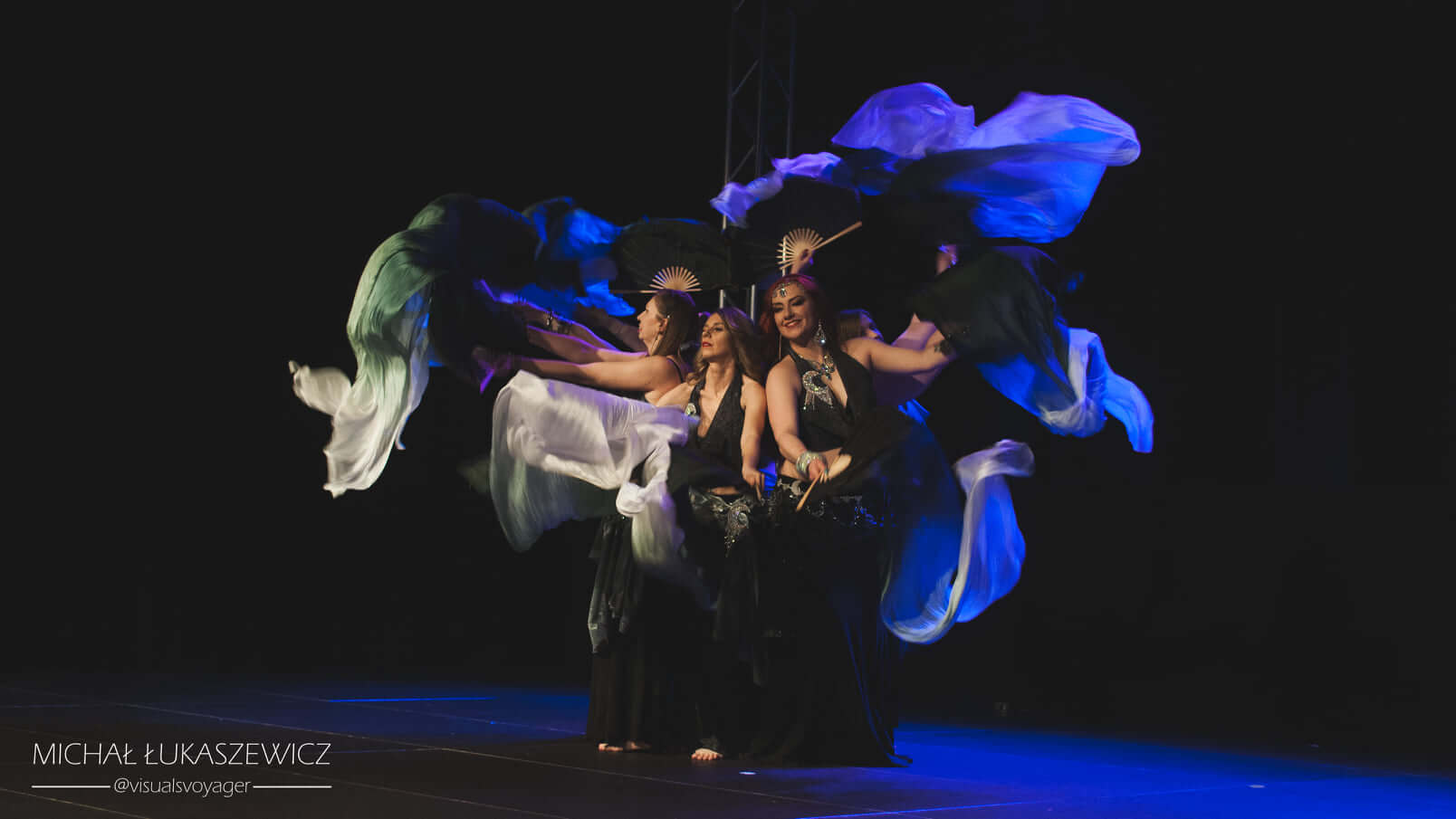
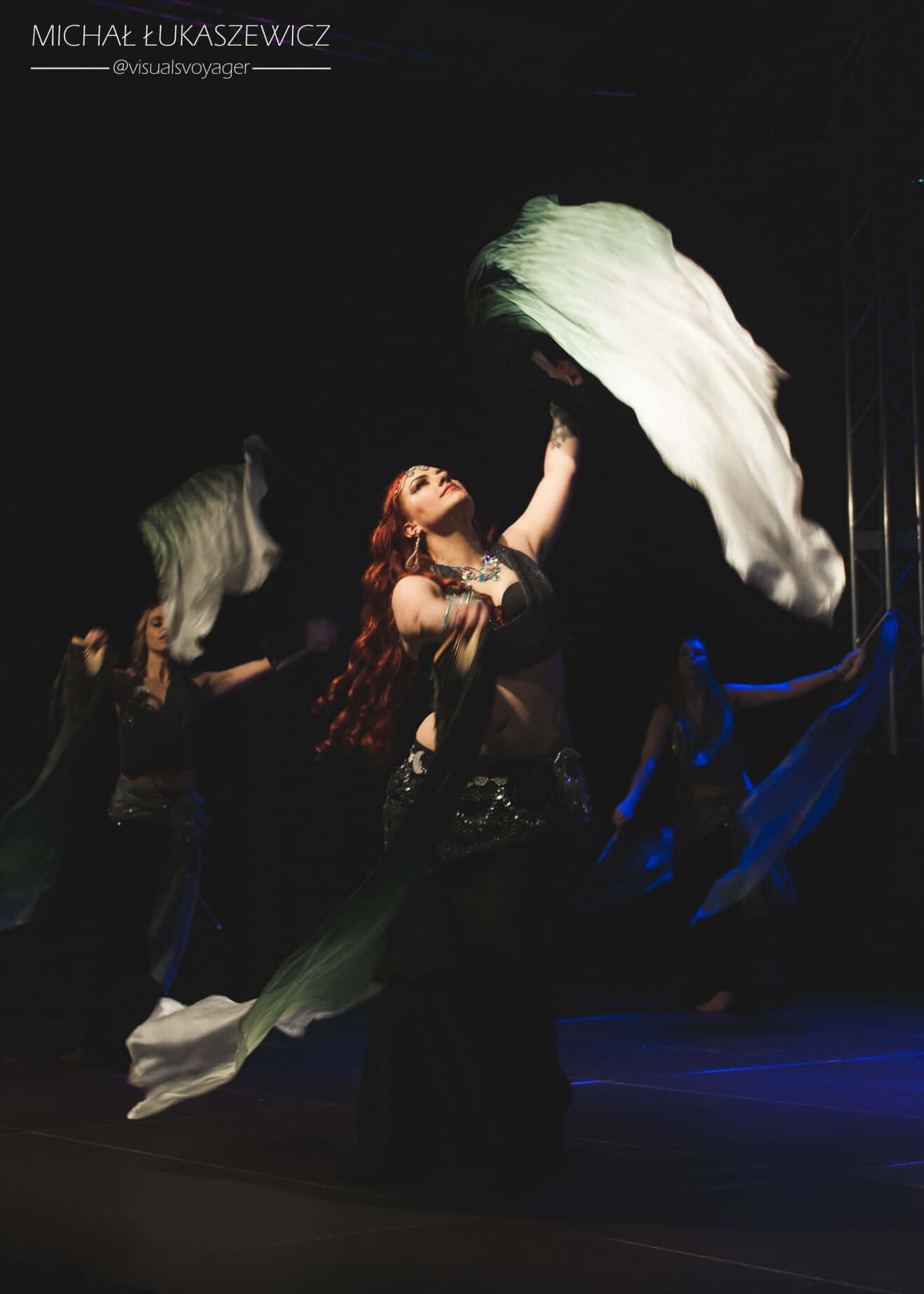
The prop leads everything. A silk fan is a ribbed frame with a long panel of flowing silk attached along the ribs, and it’s usually danced as a matching pair — one in each hand. You’ll start with how to hold the fans and grip them, and how to frame them around the body. From there the movement opens up: large sweeping arcs, wing shapes and spirals, plus turns, weaves and windmills that send the silk rippling. You begin with a single fan and, as your control grows, move on to double fans and short combinations, always listening to the music.
In class
Classes are led by Agata Zakrzewska in Polish and English. There are two tracks — a beginners’ group and an intermediate/advanced group — so you can start from scratch or keep building. You learn the fan handling move by move: grip, framing, the sweeping shapes, turns and weaves, then combinations on single and double fans.
Music
The fans suit lyrical, atmospheric music that gives the silk room to open and float.
Level
The style is open. The beginners’ track needs no prior dance experience, and there’s an intermediate/advanced track for dancers who want to go further.
Costume
Wear comfortable clothes that let your arms move freely — nothing that catches at a big sweep. The fans are the star of the picture.